
A strong podcast can still be hard to find. The right podcast marketing strategy gives each episode more ways to reach people, earn a listen, and prompt a clear next step. These five tactics cover discovery through measurement, with a repeatable rhythm you can keep up.
1. Social Media Clip Distribution: Turn Episodes Into a Weekly Content Rhythm
Short clips help people sample your show before committing to a full episode. A useful clip gives one clear idea, story, or answer, then points viewers to the episode or show. It can come from an interview, a sermon, a course lesson, or a webinar recording.
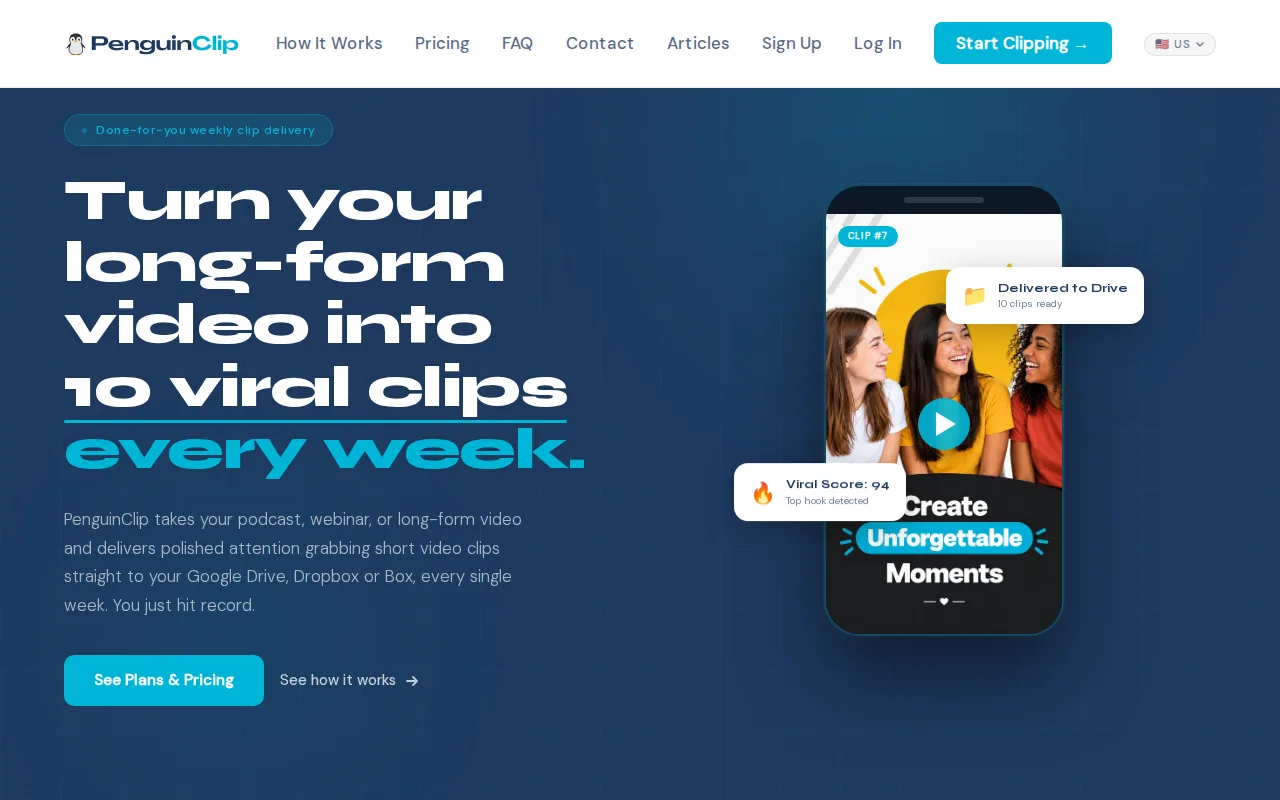
Pick a few moments that make sense on their own. Add captions so viewers can follow along without sound, and use a vertical format for short-form feeds. Then adapt the caption and call to action for each platform instead of pasting the same post everywhere.
Consistency helps you build a routine, but more posts alone don't guarantee growth. One report on cross-platform podcast content discusses how clips can introduce new listeners to a show. Treat each clip as a test: note which topic earns comments, saves, or visits to the episode page.
PenguinClip handles weekly clipping for creators who'd rather stay focused on recording. Our team selects highlights, edits and captions vertical clips, then delivers ready-to-post files. Each clip includes a viral score to help you decide what to post first. You keep creating; our team handles the editing.
For a broader content routine, pair clips with a video repurposing service suited to busy creators. Keep one simple schedule, such as a clip on the day an episode goes live and another later in the week.
2. Search-Optimized Episode Pages: Help New Listeners Find Your Show
Search-friendly episode pages give people a clear reason to click when they look for a topic you cover. Make each page about one episode and one main question. Use a plain title that says what the conversation is about, rather than a clever phrase only current listeners will understand.
Write a short summary that names the subject, guest when relevant, and the key questions discussed. Add timestamps when the episode has clear topic shifts. A transcript can help visitors scan the conversation and find the part they need, but check names and specialized terms before publishing.
Think about what a potential listener might type. A show about coaching could have episodes on setting client boundaries or planning a first session. Use the language people use for those topics in the title and page copy, and make sure the page answers the question it promises to cover.
Link related episodes together when the connection is useful. For example, an episode on sermon preparation could point to another talk on building a weekly study routine. This gives a new visitor a next listen without making them search your whole archive.
Episode pages work best as part of a wider promotion plan. A repeatable podcast promotion plan can connect search discovery with clips, guest sharing, and email, so the same episode has more than one route to an audience.
Keep the call to action specific. Ask the visitor to play the episode, subscribe, or download a related resource. One clear action is easier to follow than a page crowded with competing requests.
3. Guest Cross-Promotion and Partnerships: Reach Relevant New Audiences
A guest can help an episode reach people who already care about its subject. Make promotion part of the guest workflow: agree on a release date, send the episode link, and share a few captioned clips or suggested copy. That makes it easier for a guest to share without asking them to write a post from scratch.
Choose guests for audience fit, not just reach. A coach with a smaller but relevant community may bring more likely listeners than a name that has little to do with your show. Ask what their audience wants to learn, then shape the conversation around a real question.
Partnerships can extend past interviews. A podcast host and a webinar leader might co-host a session, share each other's signup pages, or make a related episode and live event. Set the audience and next step first. If the point is to build email signups, agree on the page and the message before promoting.
Use a clear call to action in the episode and in the guest's post. It might be “listen to the full conversation” or “get the worksheet.” Avoid asking people to follow three accounts and sign up for a list in the same message.
For agencies and creators planning a wider promotion mix, podcast marketing services for creators can help clarify which tasks to keep in-house and which to hand off. A partner should make the shared work easier to run, not add a new approval chain.
4. Email Newsletters and Listener Funnels: Convert Attention Into Action
Email gives you a direct way to stay in touch with people who want more from your show. Invite listeners to join your list with a clear benefit, such as episode notes, a useful checklist, or updates on a related class. Tell them what they'll receive before they sign up.
Then send a short note when a new episode is out. Lead with the listener's problem or the episode's main idea, not a long recap. Add one prominent link to listen. If the episode supports a course, coaching offer, or webinar, make that next step relevant to the topic.
A simple funnel can be easy to manage. First, a clip or guest post leads someone to an episode page. Next, the page invites them to join your email list. Once they sign up, send a welcome message with the promised resource and a related episode. Later messages can share a useful tip before inviting them to a paid offer.
Use one call to action per email. If you want a listener to register for a webinar, make that the main request. If you want them to buy a course, explain who it helps and what they will learn. Don't treat every email as a sales pitch; helpful notes give readers a reason to keep opening them.
For B2B shows, email may also support careful follow-up with people who show interest. A team that needs a separate way to find companies with buying signals can explore signal-based B2B outbound tools. Keep that work distinct from the listener newsletter, and make outreach fit the recipient's role and interest.
PenguinClip can support this flow by turning long-form episodes into weekly vertical clips. Those clips give your email and social posts fresh material, while your episode page and signup form handle the next step.
5. Paid Promotion and Measured Experiments: Test Growth Without Guesswork
Paid promotion can help test whether a topic or episode resonates beyond your current audience. Start with one goal: more episode plays, email signups, or webinar registrations. Choose the action that matters most before you spend, then use a link or signup form that lets you track it.
Podcast ads can also put a show in front of listeners who already enjoy related content. Podcast advertising can include formats such as host-read sponsorships and prerecorded spots; learn more in this overview of podcast advertising. Match the format to your message, and agree on how you will judge the result before a campaign begins.
Keep tests small and change one thing at a time. You might compare two episode clips with different opening lines, or test a guest-read promotion against a social ad. If you change the audience, creative, and offer together, you'll have a hard time knowing what drove the response.
| What you're testing | What to track | What the result can tell you |
|---|---|---|
| Episode clip | Views, comments, and episode-page visits | Which topic or opening earns attention |
| Email signup offer | Signups and later listens | Whether the resource fits the episode audience |
| Paid ad | Spend, tracked visits, and signups or sales | Whether the campaign supports its stated goal |
Don't judge a campaign by downloads alone if the goal is a sale or signup. Track what happens after the listen too. A podcast marketing strategy gets easier to improve when you can connect the source of attention to the action you wanted.
Frequently Asked Questions
What is a podcast marketing strategy?
A podcast marketing strategy is a plan for helping the right people find and act on your show. It connects audience fit with discovery tactics such as social clips, search-friendly episode pages, guest sharing, email, and paid promotion. It should also define what success means, such as more relevant listens, email signups, or sales.
How often should I promote a podcast episode?
Promote an episode more than once, but don't post the same message on repeat. You could share a clip on release day, send an email to your list, then share another useful moment later. Keep a schedule you can maintain, and use audience response to decide which topics deserve another post.
Do podcast clips help grow an audience?
Podcast clips can help new people sample a show before they listen to a full episode. Choose moments that make sense on their own, add captions, and give viewers a clear next step. A clip's views are only part of the picture, so also watch for episode visits, follows, or signups.
How do I measure podcast marketing results?
Measure results against the goal of each campaign. Track episode plays when you want more listening, email signups when you want to grow your list, and sales or registrations when you promote an offer. Use links or forms that show where people came from, then review the results before repeating the campaign.
Conclusion
Choose one tactic you can repeat this month, then track the action it brings. If weekly clipping is the part that keeps slipping, PenguinClip can handle the editing and deliver a batch of polished vertical clips each week. Start by setting a release-day schedule and choosing one clear call to action for your next episode.